
What is archaeology anyways?
- Cayman Islands National Museum

- May 29
- 3 min read
By Lottie Gray, BA, MA
Volunteer archaeologist at the Cayman Islands National Museum
From Indiana Jones to Rick O’Connell, pop culture is full of swashbuckling adventurers who battle their way through jungles and deserts in the name of archaeology. Facing off against long-buried curses and angry local populations, they ‘rescue’ priceless artefacts and bring them back to the ‘safety’ of English and American museums. However, as entertaining as these films are, real world archaeology looks a bit different.
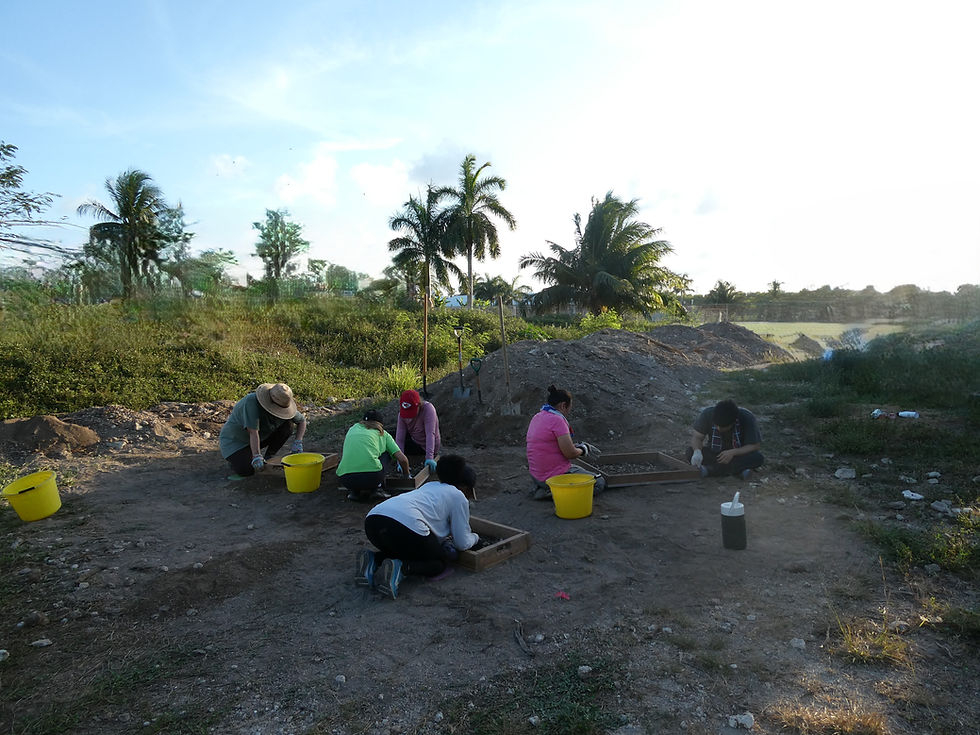
The Oxford Dictionary defines archaeology as, “The collective artefacts, burials, structures, and other material remains of a particular people, locality, period, etc., recovered through excavation or remaining in situ; archaeological remains”. To put it simply, archaeology is a science. To be an archaeologist is to study the material remains of the past for the purpose of better understanding the people who came before us and the world that they lived in.
Archaeology is an inherently destructive practice, so archaeologists prefer not to dig unless necessary. In the age of modern technology, remote sensing methodologies and digital mapping are preferred approaches to excavating when possible. When an excavation does take place, it is due to careful research indicating that:
There is information at the site which can fill a gap in our knowledge of the past
The finds at the site will offer a new perspective on the past
OR The site itself or finds within it are in imminent danger of destruction
A common misconception is that in order to study the material remains of the past, the remains must be removed from the excavation site; that in order to truly understand, we must collect as many artefacts as possible. The misconception continues that once the digging is done. The artefacts are all sold or gifted to museums and private collections around the world to be displayed and shown off. In reality, while a portion of the excavated material is removed, material is also often left in place or returned to the site later on. With museums around the world struggling with overflowing collections, it is essential for archaeologists to retain scholarship as their focus and only take artefacts from the site when it is believed that doing so will allow for discovery of valuable new information. Yes, these same objects may someday make for educational museum displays, but this is an additional benefit and not the primary goal of archaeology. Ideally it is only material of significant historical value that will be permanently removed from an excavation site.
While no archaeologist would deny the entertainment value of a good Indiana Jones movie, it’s important to realize that the work done by real archaeologists centers more on academic research, preservation of culture, and careful methodology than on jungle expeditions and lost temples. This does not mean that archaeology is not exciting; the study of the past, whether through excavation or archival research, is in my opinion a better adventure than any desert trek could ever be.
One of the most exciting parts of archaeology is discovering new links to the past. In day-to-day life, you may even experience this by encountering remnants of history in unexpected places. If you happen to come across archaeology in the wild, whether it’s a potential site or a piece of material, channel your inner archaeologist and follow these steps:
Leave it in place
Avoid disturbing it
Take a photo
Contact the National Museum or National Trust so they can investigate

Removing material from the ground or disturbing a site, even if well-intentioned, causes loss of essential contextual information that could help an object tell its story. This is the crucial aspect of what makes some an archaeologist and not a treasure hunter (like our dear friend Indy...): the focus must always remain on the information the material can provide, never the value, perceived or actual, of the material itself.
If this has you keen on getting involved in the world of archaeology, the best place to start is by reading. There are vast numbers of resources available online and in libraries, where you can read up on parts of history that interest you, on modern archaeological methodologies, and on the fascinating archaeological discoveries happening around the world each day.


Comments